PRACTICE: The Balancing Warrior (Virabhadrasana/ Warrior III)
- Virabadrasana III -
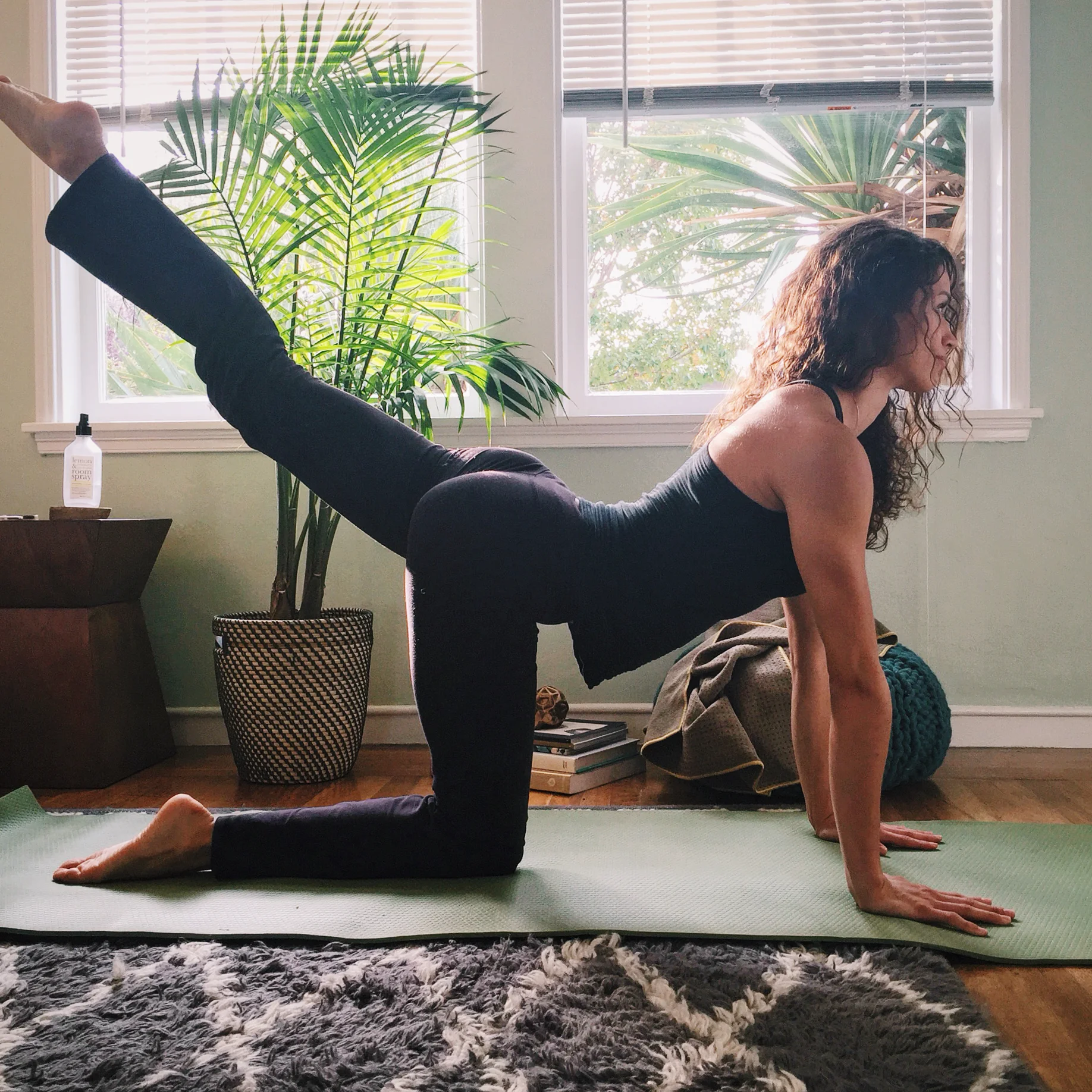
The Balancing Warrior
[ standing balance for hip stability, core + glute strength. ]
set-up 01 /
Stand with the feet about hips-width distance. Root both feet into the ground to secure a stable foundation for balancing. Lift up through the knee-caps to activate the quadriceps, the large group of muscles that make up the front of the thigh. Kickstand your right leg back behind you (as shown). This will be your working leg. Bring the hands onto the hips to help with hip-stability and to keep hips squared forward. Keep the chest open and shoulders away from the ears. Breathe in a relaxed manner, maintain a calm expression.
transition 02 /
Engage your lowest abdominal muscles by tucking your tailbone down. Maintain your sense of balance by squeezing the glute and external hip muscles toward the midline. Relax the chest until the ribs depress in toward the body rather than splaying outward. Imagine the muscles of the torso hugging inward toward the spine.
Shift your weight into the left leg and foot. This is your standing, supporting leg. Keep everything nice and tight as you start to hinge forward from the hips until the torso is parallel with the ground. Keep reaching the crown of the head forward and the right foot straight back behind you, working toward extending the leg at hip height. The working, extended right leg may have a tendency to lift above the hip, but the hips must remain square. Keep a slight bend in the standing, supporting left leg to keep the leg muscles engaged and active, protecting the more vulnerable knee-joint.
Focus on strength, stability, and balance. Keep the chest open even more by squeezing the back muscles together and externally rotating at the shoulder joint. Imagine rolling shoulders backward to stretch across the chest. Watch for flaring of the low, floating ribs. Use strong exhales to "knit" the lower ribs inward. Challenge yourself to hold this posture for 3-5 breaths and then return to a standing position. Reset and switch sides.
This works the thighs of the supporting leg and gluteal muscles of the working leg. It also challenges balance and stability and strengthens the core muscles.
12 - 15 reps X 3 rounds; Each Side
- INSPIRATION TO START -
To support a consistent practice, I invite you to meditate with me from 2-10 minutes for the next week. You can do these short meditations from anywhere and at any moment.
“Grounding” your mind and body is a deceptively simple technique for coping with anxiety and the disconnection that anxiety often brings.
Approaching cooking as self-care means bringing attention and intention to the act of preparing a meal to nourish not only the body, but the mind and spirit.
New Moon Solar Eclipse in Cancer: waves of emotion surface and swell from the depths of conciousness into the light of pure awareness. This lunar cycle invites us to feel what it means to “be like water.” To drop our weapons, release our defenses, be receptive, to flow without force? This is a ripe time to process and understand our karmic past against the our current position, and move in-tune with our inner systems.
NADI SHODHANA is a type of breathing practice where airflow is controlled through alternate nostrils to bring a practitioner toward a subtle sensation of internal balance.
The breath may seem so simple, but it is so profound. It is intimately linked to and has a direct influence on the body, mind, and emotions. Breathing techniques like Bhramari Pranayama have also been shown be incredibly effective self-regulation techniques for anyone suffering from anxiety and PTSD. It is no wonder techniques to control and direct the breath have been practiced for centuries, especially techniques to prepare yoga practitioners for the journey inward toward concentration, contemplation, and meditation.
Mudra is a sanskrit word meaning seal. In yoga it refers to gestures or attitudes which can be psychic, emotional, devotional, or simply for aesthetic effect. Mudras are used to influence the flow of prāṇa, or life-sustaining energy as well as to alter mood or increase concentration and focus on an object of meditation. A mudra can be a simple gesture with the hands or it can be a complex and prescriptive combination of body posture, subtle physical movements including muscular contractions and breathing techniques along with visualization.
So you've started a home practice, but you feel stuck. It happens. Without guidance from a teacher giving you cues and moving you through your practice, it can be hard to just simply START. But don't worry, building sustainable habits takes time and patience. If you can relate, here are some tips to get you moving along
BHRAMARI BREATH, aka "Bumble Bee" or "Humming Bee” breath, is a simple yet powerful breathwork technique that offers immediate relief from moderate to severe anxiety.
Anxiety can seem like a fact of daily life, but there are ways to take back control over triggers and bring yourself out of high-anxiety modes.
The ujjayi breath is used as a tool to encourage the mind to rest its awareness on the immediate experience unfolding before us. We become a "witness" to the waves of breath continuously coming and going in the present moment of the "here-and-now." Discover the benefits of this transformative breath practice and try it for yourself using the Ujjayi HOW-TO guide.
Affirmations are a scientifically supported self-care strategy for improving mental and neurological health. ‘Inner Truth Affirmations’ connect you back to the core of who you are. Each affirmation serves as a reminder for cultivating the self-trust and clarity necessary to make your own choices and encourages you to embody the confidence to express who you truly are.